
In today’s digital era, images are everywhere. From social media posts to videos, the first impression often comes from visuals.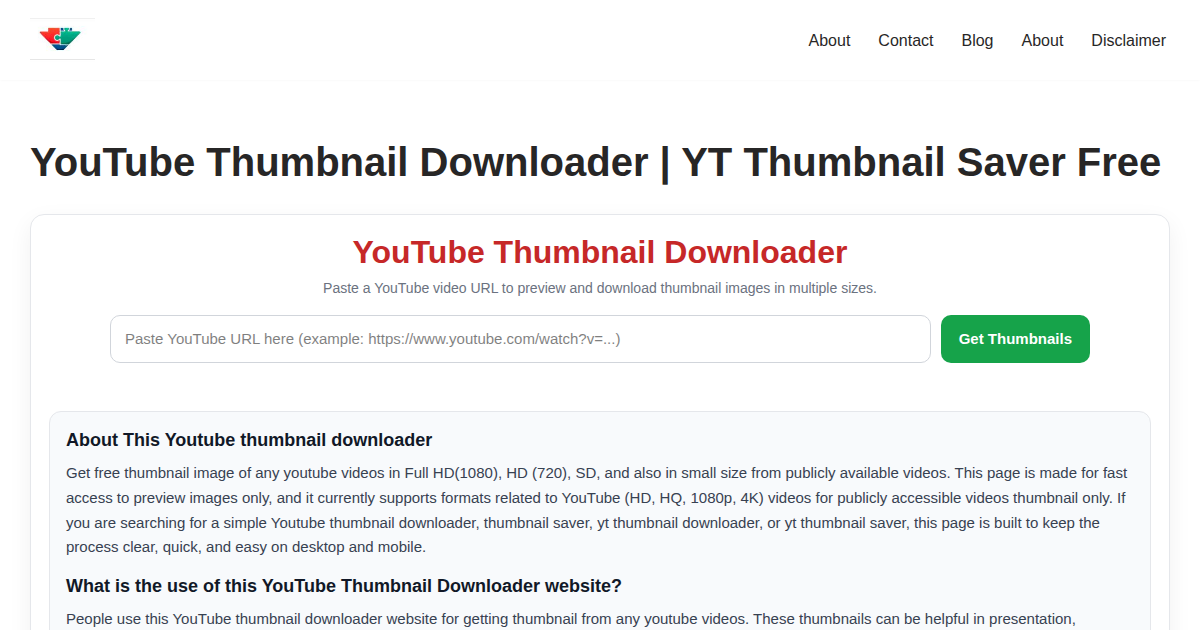
This is where Thumbnail Save becomes essential. Many people rely on online tools to save and manage thumbnails efficiently. But have you ever wondered how Thumbnail Save online tools actually work?
This guide will break it down for you in simple terms, covering everything from the basics to advanced usage.
What is a Thumbnail?
Before diving into how Thumbnail Save works, it’s important to understand what a thumbnail is. A thumbnail is a small version of a larger image or video. Think of it as a preview. Just like the cover of a book gives you an idea of the story inside, thumbnails give users a glimpse of the content.
Thumbnails are crucial for websites, blogs, and social media platforms. They help users quickly identify content and make decisions faster. They also play a big role in user engagement. A well-designed thumbnail can increase clicks and drive more traffic.
Why People Use Thumbnail Save Online
The process of saving thumbnails manually can be time-consuming. Websites often do not allow direct downloads, or the thumbnails may be embedded in complex code. This is why Thumbnail Save online tools have become so popular.
Here are some reasons people use Thumbnail Save services:
-
Convenience: You can save thumbnails in seconds without installing any software.
-
Organization: These tools often allow batch downloading or organizing thumbnails efficiently.
-
Accessibility: You can access your saved thumbnails from anywhere with an internet connection.
-
Multiple Formats: Many online services allow you to download thumbnails in various formats like JPEG, PNG, or GIF.
How Thumbnail Save Online Tools Work
Understanding the mechanics of Thumbnail Save online tools is easier than you might think. These tools are designed to extract, process, and save thumbnails from online platforms. Let’s break down the main steps.
1. Input the URL or Media Source
Most Thumbnail Save tools start by asking you to input a link. This could be a video link from YouTube, a webpage, or a social media post. The tool needs this link to identify where the thumbnail is located.
For example, if you enter a YouTube video link, the tool scans the video metadata to find the thumbnail image.
2. Extraction of Thumbnail
Once the link is provided, the tool uses various algorithms to locate the thumbnail. Depending on the platform, this process may involve:
-
Fetching Metadata: Many websites store thumbnail information in the media metadata. The tool can read this to locate the thumbnail.
-
HTML Scraping: Some tools scan the webpage’s HTML code to find image URLs.
-
API Access: Certain platforms provide public APIs (Application Programming Interfaces) to access video or image data. Tools use these APIs to fetch thumbnails directly.
After extraction, the thumbnail is usually displayed in a preview, so the user can confirm before saving.
3. Conversion and Optimization
After extraction, the thumbnail may need some processing. Online Thumbnail Save tools often provide options for:
-
Format Conversion: Changing the image to JPEG, PNG, or other formats.
-
Resizing: Adjusting the dimensions to suit your needs.
-
Compression: Reducing file size without losing quality, which is useful for web usage.
This step ensures that the saved thumbnail is ready for immediate use.
4. Download and Storage
Finally, after extraction and processing, the thumbnail is ready to be saved. Most tools allow you to download the thumbnail directly to your device. Some also provide cloud storage options for easy access later.
With just a few clicks, users can complete the Thumbnail Save process efficiently.
Popular Platforms Where Thumbnail Save Works
Thumbnail Save tools are versatile and work across many online platforms. Here are a few examples:
YouTube
YouTube videos often have multiple thumbnail options. Online tools can fetch the default thumbnail or high-resolution versions. This is particularly useful for content creators who want to showcase video previews elsewhere.
Social Media Platforms
Platforms like Instagram, Facebook, and Twitter also rely heavily on thumbnails for posts and videos. Thumbnail Save tools allow you to grab these images for sharing, archiving, or reposting.
Websites and Blogs
Websites often use thumbnails for articles or product images. Using a Thumbnail Save tool, you can download these images for personal reference or content creation purposes.
Advantages of Using Thumbnail Save Online
Using Thumbnail Save online offers several benefits beyond convenience:
-
Time-Saving: Extracting and saving thumbnails manually can take hours, especially if you have multiple images. Online tools reduce this to minutes.
-
No Technical Skills Needed: Even beginners can use these tools. There is no need for programming knowledge.
-
High-Quality Images: Many tools allow you to save high-resolution thumbnails, ensuring quality is maintained.
-
Cross-Platform Compatibility: Online tools work on PCs, tablets, and smartphones.
Tips for Effective Thumbnail Saving
Even with online tools, there are some best practices to get the most out of Thumbnail Save:
-
Check Copyrights: Not all thumbnails can be freely used. Make sure you have permission if you plan to use them publicly.
-
Choose High-Resolution Versions: Always go for the largest available thumbnail for better clarity.
-
Organize Your Downloads: Create folders by topic, date, or platform to keep thumbnails organized.
-
Batch Download When Possible: If you need multiple thumbnails, batch processing saves significant time.
Common Issues with Thumbnail Save Online Tools
While these tools are powerful, users may encounter some challenges:
-
Blocked Content: Some websites prevent automated access, making it hard to extract thumbnails.
-
Low-Resolution Images: Sometimes the tool only provides smaller versions of the thumbnail.
-
Ads and Pop-Ups: Free online tools often have intrusive ads, which can be frustrating.
-
Privacy Concerns: Some tools may require access to your data or browsing history. Always use trusted platforms.
Future of Thumbnail Save Online
The need for Thumbnail Save tools will continue to grow. As more content is uploaded online, having easy access to thumbnails will be essential for content creators, marketers, and everyday users.
Advancements may include:
-
AI-Based Extraction: Tools that can intelligently identify and save the best thumbnail from videos or articles.
-
Integrated Editing: Platforms may allow you to save and edit thumbnails in one seamless process.
-
Cloud Sync: Automatic saving to cloud accounts for instant access across devices.
Conclusion
In conclusion, Thumbnail Save online tools have become indispensable in the digital age. They simplify the process of extracting, processing, and downloading thumbnails from a wide range of platforms. These tools save time, increase productivity, and make visual content management much easier.
Understanding how these tools work allows users to leverage them effectively, whether for personal projects, content creation, or professional purposes. By following best practices and choosing reliable services, you can make the most out of Thumbnail Save tools while avoiding common pitfalls.
If you are someone who frequently works with online content, learning to use Thumbnail Save tools effectively is a skill worth mastering. It bridges the gap between accessing visual content and using it efficiently in your projects.
The digital world is increasingly visual, and mastering Thumbnail Save techniques ensures you are always one step ahead in managing and utilizing images online.