
Introduction: Stability Is Not a Luxury, It’s a Pact
Production lives or dies on repeatable motion. Your robotics parts—grippers, servo drives, and reducers—sit inside a larger stack of industrial robot components that must act as one. Picture a night shift: a palletizer starts missing picks, the wrist jitters by half a degree, and OEE drops 12% before dawn. That’s not just scrap or downtime; it’s a breach of confidence with your team and your market. We say we build for durability, yet drift creeps in by quarter two (no surprise when cycle counts hit the millions). The data points are clear: micro-slip in joints, sensor drift under heat, and fieldbus traffic spikes that add just enough latency to matter. But here’s the point—if the system is “in spec,” why do your outputs still fade?
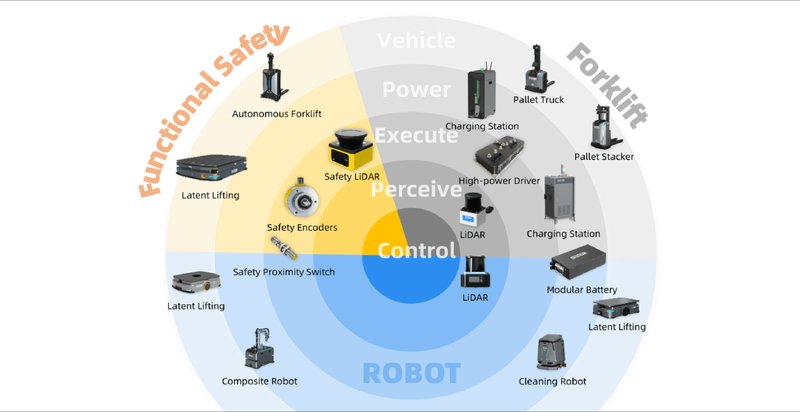
The answer sits in how we judge stability, not only how we design it. The line performs on day one, sure, but long-run control is won in edge sensing, in power converters that don’t sag, and in the quiet math of compensation tables. — funny how that works, right? The real policy stance is simple: your plant deserves consistency you can defend. So let’s move from symptoms to causes.
Under the Hood: The Limits of Patch-and-Polish Fixes
What keeps precision from slipping?
Look, it’s simpler than you think. Many “fixes” are cosmetic. Swap a gearbox, retune a PID loop, add a stiffer coupling—then applaud the short-term win. But the deeper issue is cumulative variance across industrial robot components. Gear train wear adds backlash; encoder quantization masks micro-movement; thermal creep shifts arm geometry by fractions that matter at the gripper tip. Meanwhile, power converters age and sag under peak loads, and the control loop can’t see it. You push faster cycles, then wonder why pick tolerances widen. Traditional answers—calendar maintenance, manual calibration, bigger safety factors—treat symptoms, not sources. The result is a loop that “looks stable” but chases errors the moment payloads or temperatures change.
The control model is often the culprit. Classic PID assumes steady friction and predictable inertia. Reality fights back with stiction, variable payloads, and tool changeovers that reset dynamics every hour. Add fieldbus latency during shift spikes and the loop lags just enough to smear precision. Centralized logging helps after the fact, but it misses the moment of truth. You need edge computing nodes right at the joints to catch anomalies as they form. Without it, calibration drifts between inspections, force-torque sensors can’t reconcile fast impacts, and you’re left tuning by feel instead of evidence. That’s not discipline—it’s roulette.
Beyond Drift: Principles That Keep Lines Honest
What’s Next
Here’s the comparative truth: closed-loop stability today is built, not assumed. New stacks for industrial robot components fuse model-based control with local intelligence. Think of it as three layers. First, smart sensing: encoders with fine interpolation, IMU fusion, and force-torque feedback that self-checks posture in motion. Second, adaptive control: model predictive control that updates parameters on the fly as temperatures rise or payloads shift—no heroic retuning. Third, local analytics: edge agents at each axis measuring current draw, micro-vibration spectra, and thermal gradients to flag early-stage backlash or bearing wear. The principle is simple but strong—detect, compensate, then escalate only when thresholds are real (not noise). Your cycle stays stable because the math stays honest at the edge.

So how do you choose among solutions that all promise “precision”? Use three metrics and make them specific. One: drift budget per 10,000 cycles—measured at the tool center point, under heat. Two: control recovery time after a payload or speed change—how fast does the loop re-stabilize without manual PID edits? Three: edge diagnostic fidelity—can the system identify which joint, which component, and which failure mode before it hurts OEE? Keep these tight and your line stays fair to operators and customers alike—policy made practical. In the end, stable motion is a right, not luck. And the vendors who respect that will earn your trust, cycle after cycle. For more context grounded in real deployments, see SEER Robotics.